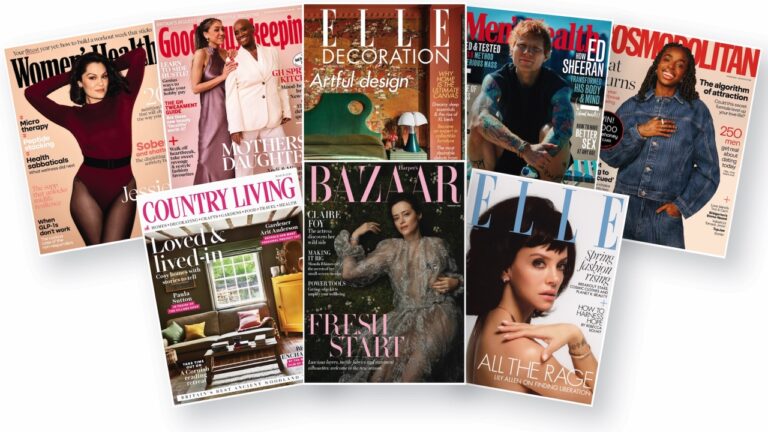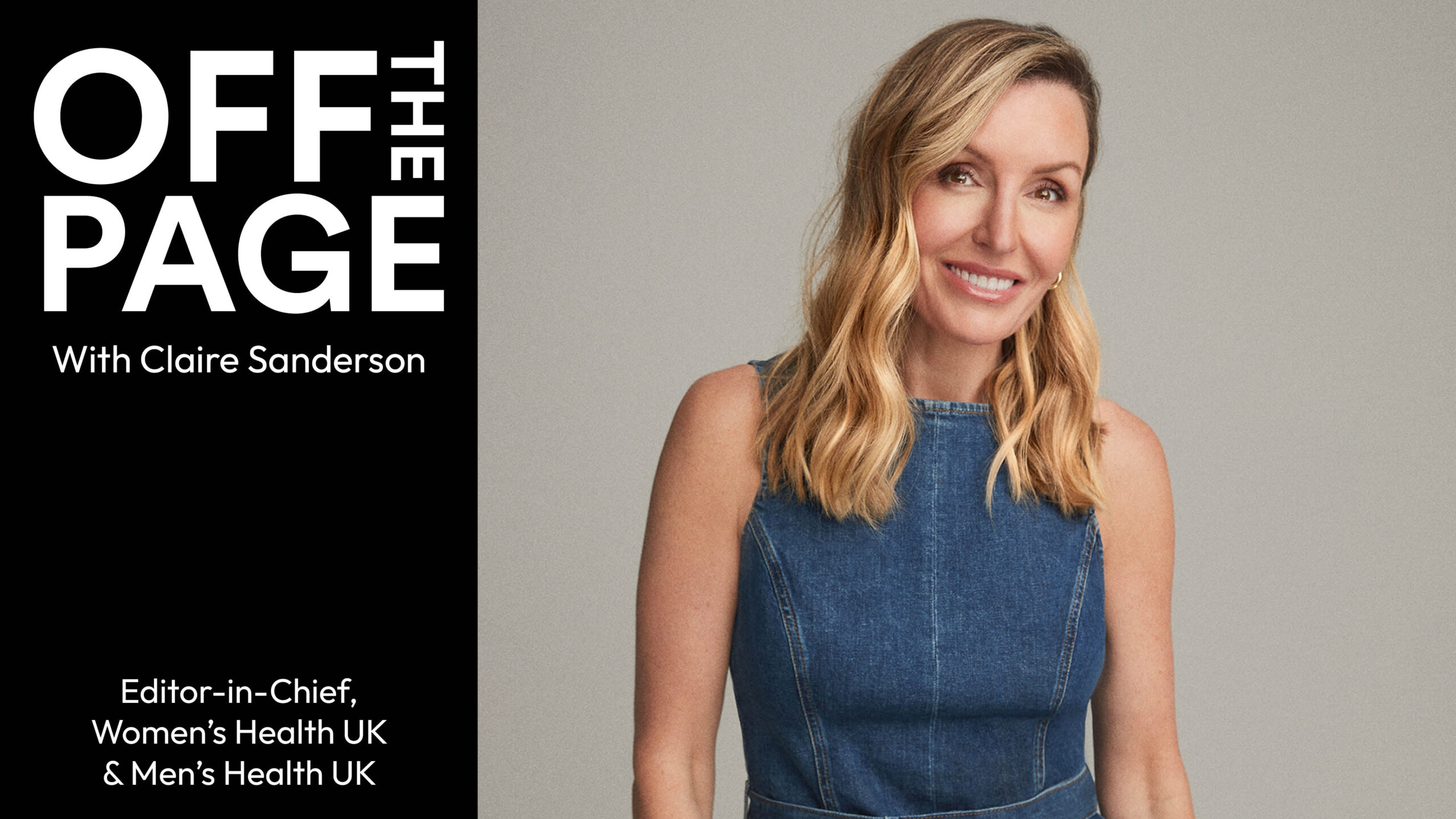
Welcome back to “Off the Page,” our interview series spotlighting the editorial voices behind Hearst’s global brands. Our latest installment features Claire Sanderson, whose leadership has redefined conversations around strength, credibility, and modern wellbeing. Since taking the helm of Women’s Health UK in 2017 — and stepping in to lead Men’s Health UK in 2023 — Claire has led a dynamic phase of growth, from award-winning campaigns to the launches of the Just As Well and Built For Life podcasts, further cementing both brands’ authority in an increasingly complex health landscape.
In conversation with Kim St. Clair Bodden, SVP, Editorial & Brand Director of Hearst Magazines International, Claire reflects on the responsibility of health journalism, personal ambition, and why the gym remains her clearest space for thinking.
You built your career at some of the UK’s most influential media brands — including The Sun Online, Look, Grazia, and First magazine — before stepping into Women’s Health UK, a title rooted in science, service, and real life. What pulled you toward health and wellbeing at that moment — and how has your sense of the power (and responsibility) of health media shifted over time?
I’ve always been obsessed with health and wellness. When Women’s Health launched in the UK, I used to tell the staff at the magazine brand I was working on at the time that one day I would edit it. The day I got the job was one of the happiest of my life. To marry my authentic personal passion with my profession is a gift I will never take for granted.
We’re living in a world where misinformation about health is endemic online. Social media is awash with advice that isn’t just misleading, but potentially dangerous. And now AI has entered the conversation. You can ask it anything and it will produce a convincing, plausible answer in seconds. But what editorial scrutiny has that information been through? Which qualified experts were consulted? What accountability sits behind it?
That’s why trusted health media matters more than ever. At Women’s Health and Men’s Health, our content is created by experienced journalists who rigorously source credible experts and interrogate the evidence. We don’t just publish what sounds good — we publish what stands up. In a noisy, confusing wellness landscape, trusted brands aren’t just relevant; they are essential.
When you think back to the start of your career, how has the reader changed — and how has your idea of the Women’s Health reader evolved? Looking ahead, what cultural shifts or emerging conversations are you most excited to explore next?
The level of wellness literacy among the average Women’s Health reader has evolved dramatically. The baseline knowledge today rivals that of a professional athlete a decade ago. Women are more engaged with their health data, more curious about performance, and far more sophisticated in the type of wellness content they can absorb and interrogate.
Wellness was once positioned as a luxury — the preserve of the wealthy. Now it’s far more democratic. Access to information, communities and training methodologies has opened it up to many more people, which is a joy to see. Younger generations, in particular, are markedly more health-conscious than mine ever was.
We’re also witnessing a powerful shift in who fitness is “for”. Women in their eighties are competing in Hyrox. Women long past menopause are lifting heavy weights, building muscle, and looking and feeling extraordinary. In the UK, some of our best-performing content spotlights older women doing incredible things in fitness — and I am absolutely here for it.
Looking ahead, I’m fascinated by where the conversation around GLP-1s will take us. Right now they’re expensive and, although widely used, still inaccessible to many. But once patents expire and they become mass market, could we be looking at a seismic shift in global obesity rates? What would that mean for long-term health outcomes — and for public health systems like the NHS?
And we’re only at the beginning of understanding these peptides. Emerging research is exploring links to improved cardiovascular health, better dementia outcomes and even addiction treatment. There is still much to study, but every clinician I speak to agrees this is one of the most exciting medical advancements in recent years.
In a world shaped by data, algorithms, and now AI-driven health advice, how do you protect a strong editorial point of view? What principles guide Women’s Health in staying trusted, evidence-led, and human?
All of our content is created by journalists who consult leading, credentialed experts. Editorial integrity is non-negotiable. We translate complex, science-dense information into journalism that is rigorous yet accessible — content you can trust, even if you don’t have a medical degree. It’s service-driven, but delivered with warmth, nuance and a human perspective that AI simply cannot replicate.
Women’s Health stays true to its DNA. We scrutinise health trends rather than blindly amplify them. We interrogate the evidence, challenge the hype and take our responsibility to our audience seriously. In a landscape crowded with noise, credibility isn’t a nice-to-have — it’s everything.
Women’s Health is a brand with real heritage. How do you honor that legacy while redefining what aspiration looks like for the next generation? More broadly, how have you seen women’s relationship with health and wellbeing change during your career?
When I joined Women’s Health a decade ago, women were still largely training to be smaller — to take up less space. Cardio was king. The goal was to shrink.
But something shifted. Women grew tired of being told to minimise themselves. At the same time, the science around muscle as a cornerstone of metabolic health and longevity became impossible to ignore. Strength training moved from the margins to the mainstream. It was no longer unusual to see women confidently occupying the weights area of the gym.
Our content evolved accordingly, becoming far more strength-focused. The rise of CrossFit around eight years ago played a huge role in normalising visibly strong female physiques. Strong shoulders, powerful legs, developed glutes — these became aspirational. Strength wasn’t just accepted; it was celebrated.
That remains largely true today. But we are beginning to see a worrying resurgence of “skinny culture,” amplified by Hollywood and red-carpet trends, where certain actresses appear to be shrinking before our eyes. Cultural pendulums do swing. My hope is that this is just that — a phase — and that strong, healthy bodies ultimately win out.
Because strength is about far more than aesthetics. It’s about agency, capability and long-term health. And that’s a message worth holding the line on.
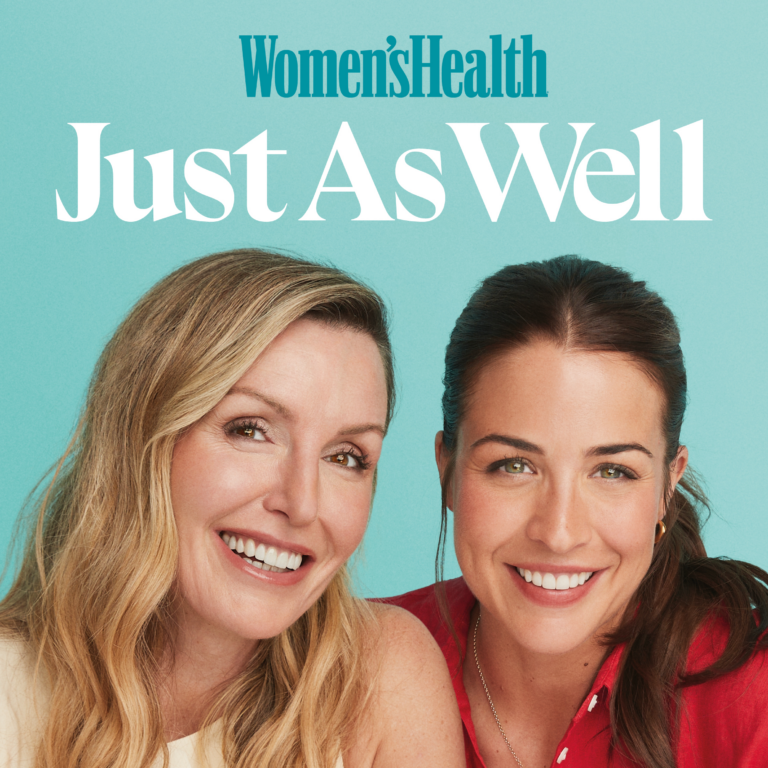
Women’s Health UK launched Just As Well last year, a podcast designed to empower and inspire women through honest, science-backed conversation. What gap were you hoping to fill — and what has the podcast revealed about how women want to engage with health stories today? How has the format allowed for vulnerability, nuance, and trust in ways print or digital sometimes can’t?
Just As Well launched last July, with me and three-time Women’s Health cover star and broadcaster Gemma Atkinson as co-hosts — and it was an immediate success.
The podcast combines the credibility of a trusted, beloved magazine brand with the reach and relatability of celebrity — a powerful and relatively unique proposition in the UK podcast space. The tone is warm, chatty and down-to-earth — like friends catching up — but the expertise is world-class. We’ve hosted globally recognised authorities such as Dr. Stacy Sims and Dr. Vonda Wright, alongside major cultural figures whose episode releases align with key moments in their careers.
Singer Jessie J’s episode was a standout success, and we have Rita Ora coming up. That blend of clinical authority and cultural relevance gives the show both depth and reach.
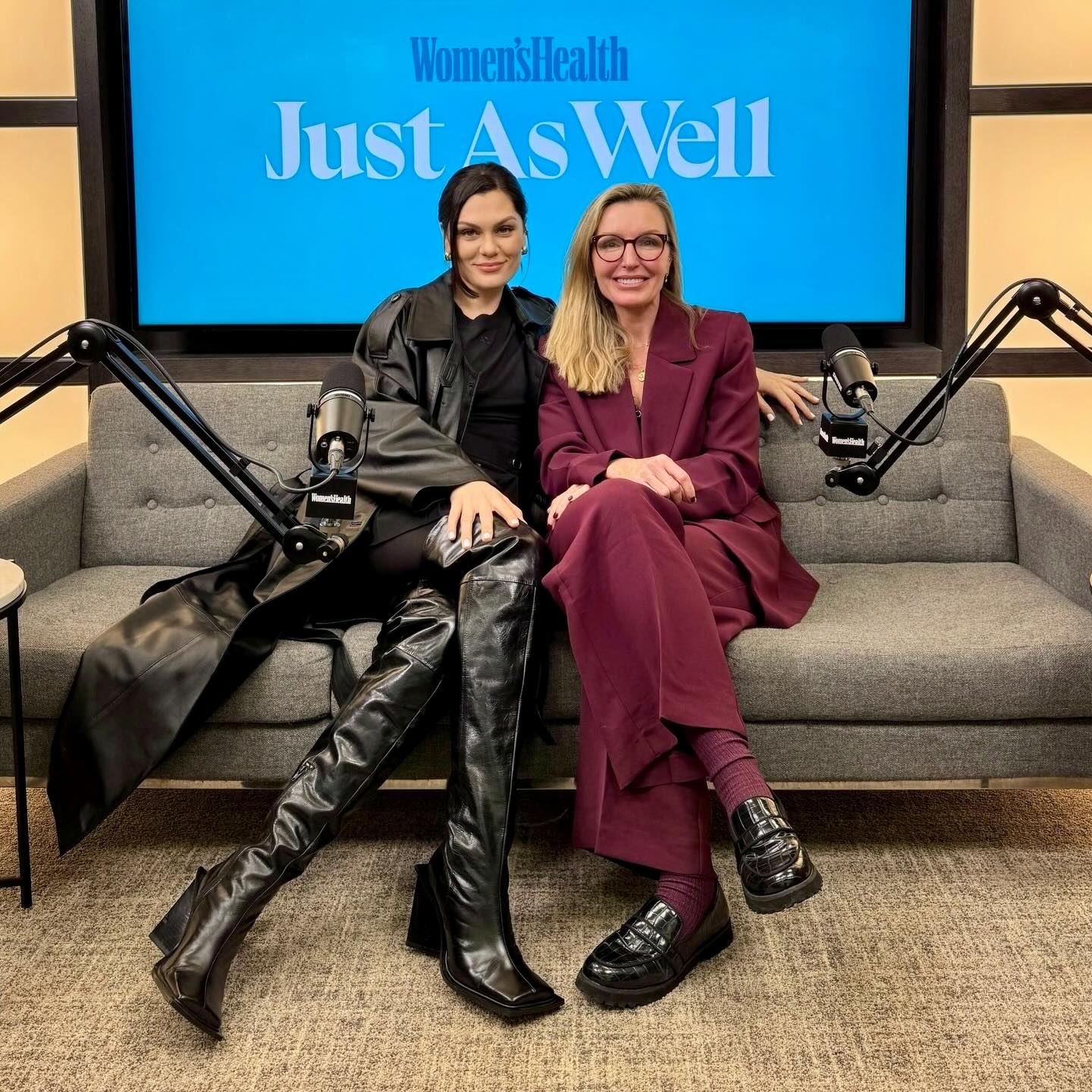
Audio creates intimacy in a way few other formats can’t. Listeners feel like they’re in the room with us. One Apple review described it as: “Like listening to your smart best friends.” That sense of access and authenticity is deliberate. We regularly invite our audience to submit questions for upcoming experts, so they feel actively involved in shaping the conversation.
It’s a format that works — editorially and commercially — and now the ambition is to scale it exponentially.
When it comes to guest energy, what really lifts an episode for you — the joyful over-sharer who brings lived experience to the mic, or the calmly skeptical, science-first voice that keeps the conversation grounded? And when it’s just you and Gemma, what do you each bring to the table, and why do you think that chemistry resonates so strongly with listeners?
A great episode lives or dies on great storytelling. That might be deeply personal lived experience — like Peloton’s Leanne Hainsby sharing her cancer diagnosis — or it might be an expert unpacking audience questions, as psychosexual therapist Kate Moyle did in response to the many submissions we received on Instagram.
Emotional honesty and practical value are both powerful drivers of engagement.
Timeliness is another key factor in download performance. When a guest is already in the cultural spotlight, audiences are actively seeking more access to them. We interviewed presenter Vicky Pattison during her stint on Strictly Come Dancing, and it remains one of our most engaged episodes to date. The same pattern held with elite sportswomen — Lucy Bronze during the Euros and Ellie Kildunne during the Women’s Rugby World Cup.
When talent is operating at peak public visibility, podcast performance follows.
Understanding that intersection — compelling storytelling, expert authority and cultural relevance — is central to how we commission and schedule episodes. It’s not just about who we book, but when and why. At the heart of the show is Gemma and mine’s friendship. We’ve known each other for eight years and have become closer since the podcast launched. I hope that chemistry comes across to the listeners.
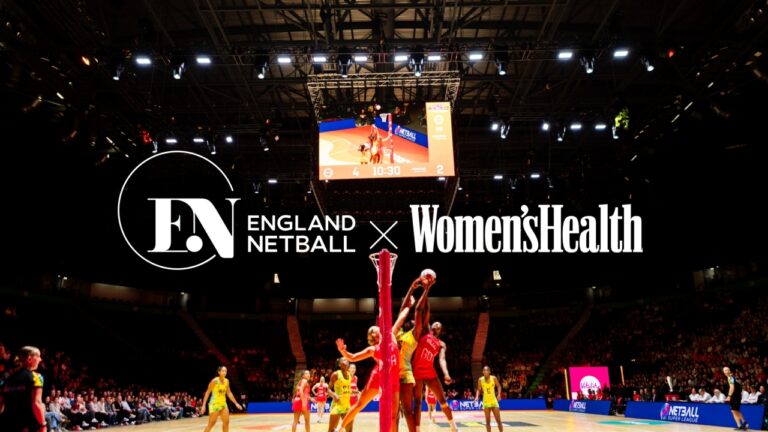
You recently did a live recording at the AO Arena ahead of the England–New Zealand netball final—what did that moment mean to you? What does it mean for the visibility of women’s sport, and the role Women’s Health can play in moving that conversation forward?
Women’s Health’s authentic support of women’s sport is one of my proudest achievements. We were putting female footballers on the cover long before much of the mainstream media followed suit. I genuinely believe we’ve played a role in helping raise the profile of women’s football in the UK.
We’ll soon have a female rugby player on the cover — another milestone. And our partnership with England Netball reflects our commitment to backing sports with bold growth ambitions, just as we’ve seen with football and rugby.
Hosting a live podcast at Manchester Arena was a particularly special moment for the brand. Not just because we were centre court at a major arena ahead of an elite women’s sporting event — but because our guests were three World Cup–winning England rugby players. It was a powerful celebration of excellence across sport.
What I love most is the cross-sport solidarity within women’s sport. You would rarely see male rugby players interviewed pitch-side ahead of another men’s fixture. But in women’s sport, there’s a genuine culture of mutual support — women championing women. And it’s an extraordinary thing to witness.
Being Editor-in-Chief of Women’s Health UK means you’re immersed in the language of self-care every day — but has the role actually made you better at looking after yourself, or just better at explaining it to everyone else? When you do properly switch off, what does your own “just as well” moment look like: movement, stillness, connection — or something that might surprise people?
In all honesty, I struggle to switch off. I’m Editor-in-Chief of Men’s Health UK as well, so my head is constantly whirring with to-do lists and problems to solve.
I recently went away to a health spa on my own for a week, thinking it would help me properly unwind. In reality, it was the worst possible thing I could have done — there were no distractions, nothing to pull my mind away from work. I’ve realised that in order to switch off, I actually need to be actively engaged in something else.
That usually involves my children. I love watching my 13-year-old son and 10-year-old daughter play sport — standing on the sidelines, just being Mum. It’s grounding and joyful in equal measure.
My true ‘me time’, though, is the gym. I love training. It sets me up mentally for the day and gives me clarity in a way nothing else does.
And I do love a great crime thriller. I’m currently on season three of The Night Agent, which I watch on my commute home. With a teen and a tween in the house, I rarely get control of the TV — so my laptop on a busy train has become my version of prime-time viewing.
Quick-Fire Round…
The small daily ritual you’d never give up?
A week ago, I would have said coffee, but I gave it up at the health spa and now it makes me feel sick. So I’ll say my 30 minute walk.
A women’s health topic you never expected to hear at a dinner party… but now do.
Women discussing their one rep squat max.
Your ideal reset: all-out sweat or a long, head-clearing walk?
Long, head clearing walk.
One health myth you’d happily delete from the internet forever.
That lifting weights will make women bulky. You must eat a continuous calorie surplus, plus have a sustained structured heavy strength training program to build size as a woman.
One fitness trend you genuinely love.
Strength training.
Last thing you read, watched, or listened to?
I read Room 706. It comes recommended but wasn’t for me. I prefer more action.
What’s giving you hope right now?
It’s hard to have hope in the current news climate so I’m going to say my children. How I’ve created two such talented, gorgeous mini humans I’ll never know. They are my ultimate joy.
Last question…looking ahead, what do you hope will carry your legacy forward—within Women’s Health, across the industry, and in the lives of the women your work continues to reach?
I hope I’ve helped make wellness more democratic. Early on, I made a conscious decision to change the visual representation of women across Women’s Health platforms. I’ve worked hard to ensure our content is inclusive — that it can be understood and enjoyed regardless of someone’s knowledge base, fitness level or starting point.
I also hope my personal story is proof that ambition, when paired with action, can be powerful. I told myself I would one day edit Women’s Health — and I made it happen. Today, I’m the only female Editor-in-Chief of Men’s Health in the world, and the only EIC leading two brands at Hearst UK.
I believe in pushing myself beyond my comfort zone. It doesn’t always feel comfortable — in fact, it often comes with that unmistakable feeling in the pit of your stomach. But I’ve learned that growth lives on the other side of that discomfort. And that’s usually where the most meaningful achievements begin.