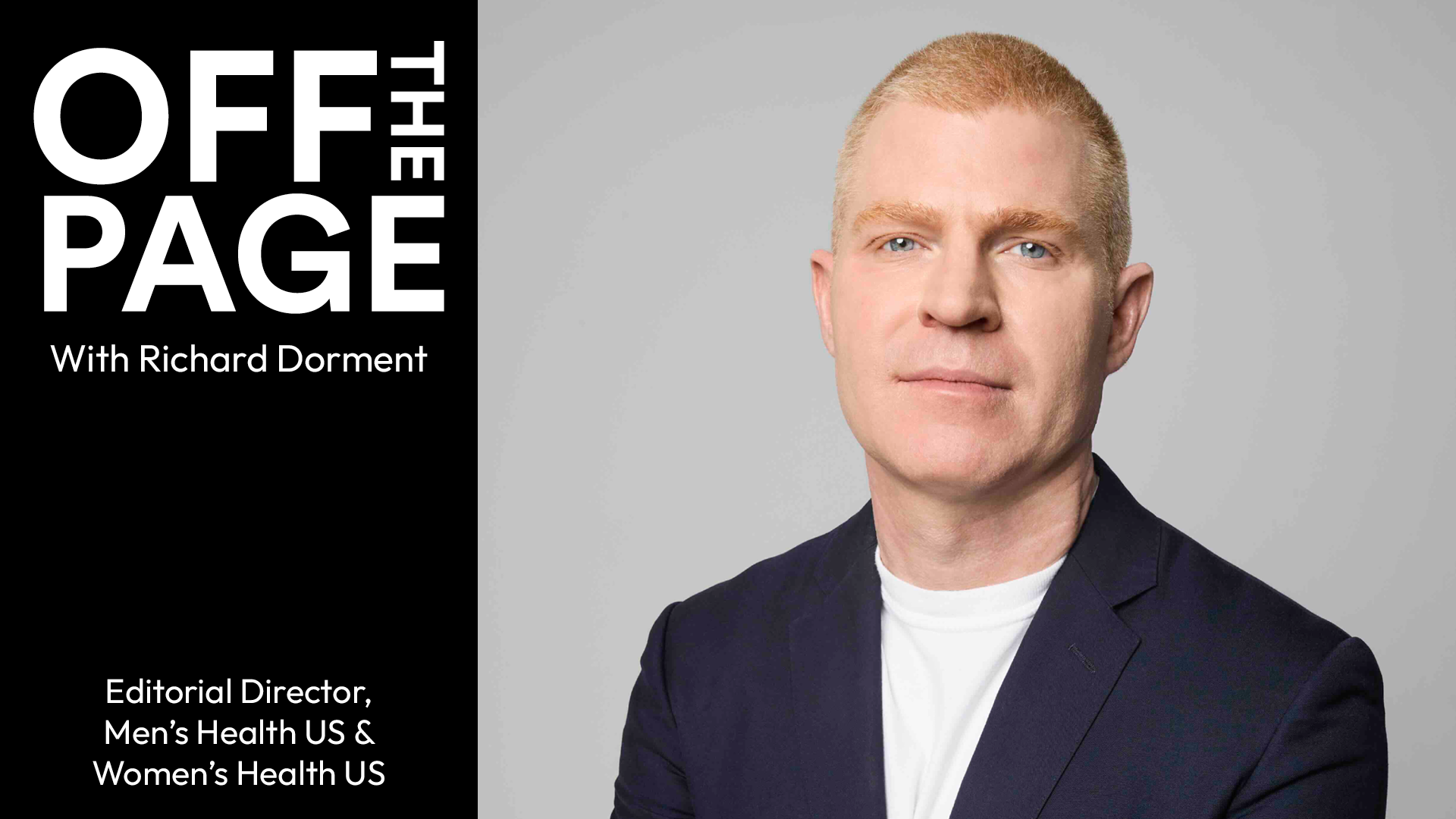
Welcome back to “Off the Page,” where we spotlight the editorial leaders behind Hearst’s global brands. Our latest interview features Richard Dorment, Editorial Director of Men’s Health US and Women’s Health US.
Overseeing two of the world’s leading wellness brands, Rich has spent the past eight years helping audiences understand a rapidly changing definition of health—one that extends far beyond fitness to encompass mental health, identity, technology, relationships, and the everyday realities of modern life.
In this conversation, Rich reflects on building trusted brands, why adaptability matters most to him as a leader, and the importance of creating space for more honest conversations around mental health. Throughout it all, one belief remains constant: great journalism doesn’t just inform people—it helps them navigate change.
You’ve led Men’s Health since 2018 and now oversee both Men’s Health and Women’s Health—two brands with distinct identities, audiences, and emotional relationships to wellness. How do you preserve what makes each voice unique while still shaping a broader editorial vision across both brands?
So, they are two brands with distinct identities, audiences, and emotional relationships to wellness, but when you get down to fundamentals, they’re really about the same thing: change. Change in our bodies and minds; change in our interior and exterior lives; and change in what we know and don’t know about how the world works. Our job at both brands is to help our audiences identify what’s changing, understand how and why it’s changing, and then figure out how they can adapt to the change as successfully as possible. It could be training for their next Hyrox or navigating AI therapy or shopping for a new wearable or making sense of the latest news around hormone change—we are here to help them adapt and thrive with common-sense, expert-backed, science-based content. That’s the broader editorial vision shared by our tremendous team of editors, designers, and producers, most of whom work across both brands and create content for site, social, commerce, video, print, and experiential.
But about those distinct identities and unique voices: women and men often face different kinds of change, and they often experience change differently. To speak to those differences with authenticity, empathy, and a strong point of view, I work closely with the executive editors of Women’s Health (Abigail Cuffey) and Men’s Health (Ben Court), who are the living, breathing embodiments of their respective brands. I make sure that they have the support, resources, and guidance to deliver energetic, informative content that meets each audience where they are.
Wellness media now sits at the intersection of culture, identity, performance, and mental health. How has your own perspective on health—and the way people relate to it—changed over the course of your career?
A few months after I took the Men’s Health job, a friend noticed I was working out more than usual and asked whether I wouldn’t prefer to edit something a little more fun—like, wasn’t Food & Wine hiring? But the timing couldn’t have been better for me. I’d spent most of my career learning how to make big ideas feel human—how technology changes us, how culture shapes us, how style and identity and ambition and anxiety and (yes) health all get tangled up in the project of becoming yourself. Which sounds lofty. Mostly, it meant learning how to ask better questions, spot nonsense, tell the truth, and make people care.
When I came to Men’s Health, I had a front-row seat to the revolution in health that was just getting underway—the wellness-ification of pretty much every area of contemporary life and culture. Thanks to all of those lessons from earlier in my career, I had the editorial training and tools I needed to help our audience make sense of it all. Personally (and a little selfishly), I was also in my late 30s at the time and starting to experience the messy middle of life: injuries, recovery, aging, anxiety, ambition, fatigue, experimentation, and the slow realization that “wellness” is a rapidly moving target.
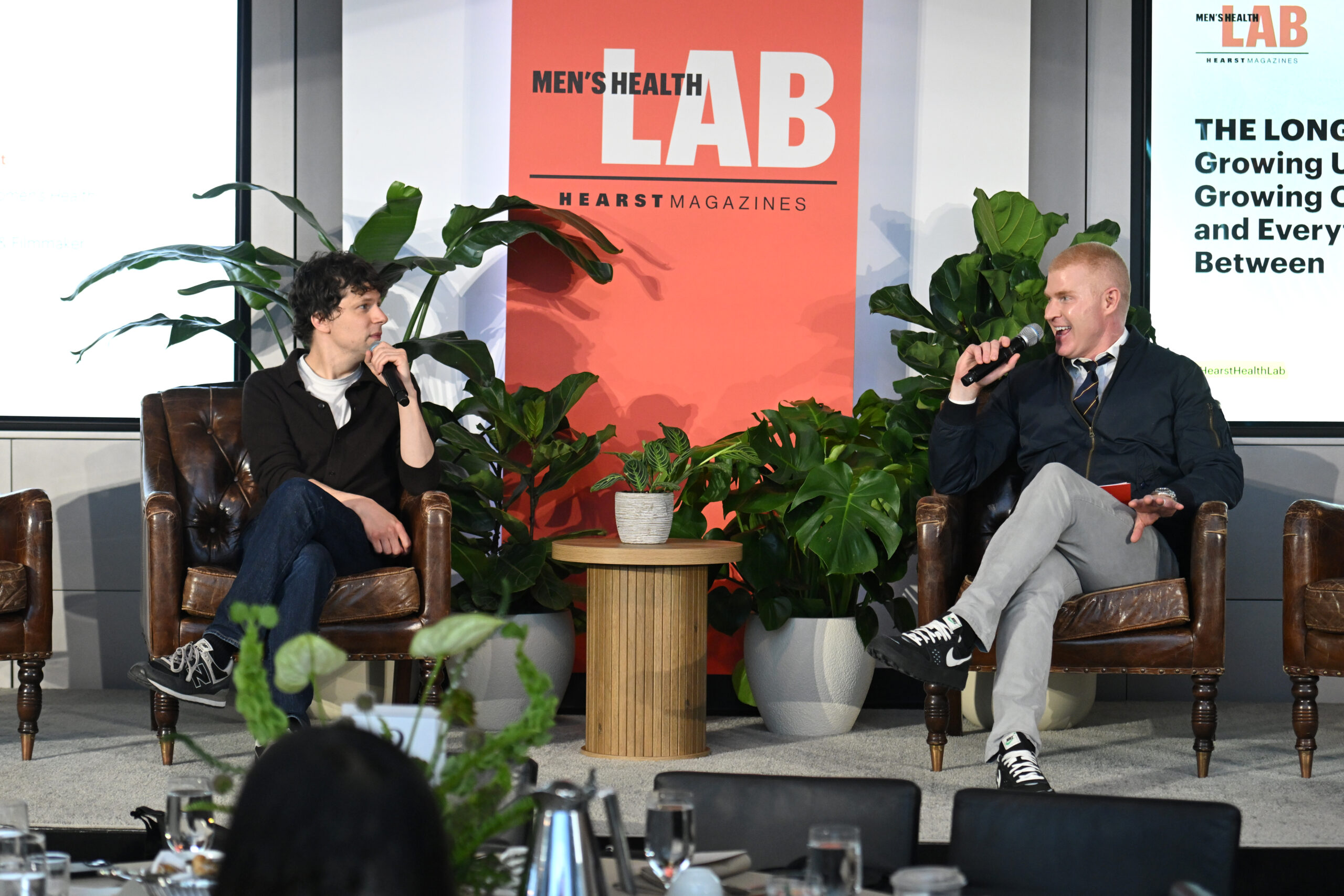
My role at Men’s Health introduced me to doctors, scientists, trainers, therapists, athletes, actors, writers, editors, creators, and regular people trying to improve their lives in all different kinds of ways. More often than not, I learned something actionable from each of them about my own body, mind, and life, and I’ve been able to share that information and inspiration with the Men’s Health audience. After eight years, I am a lot healthier and a lot happier than when I started, which I probably couldn’t say if I were at, say, Food & Wine, where I almost certainly would have developed gout.
Your work exists in an always-on environment centered around optimization, productivity, and self-improvement. How do you maintain perspective and avoid burnout within that culture?
I think of my health (and everybody’s health) as a three-legged stool. One leg is my body, one leg is my mind, and one leg is my life (my family, my friends, my job). If one leg gets wobbly, or I’m putting too much weight on one leg or not enough on another, the whole thing comes crashing down, so I spend time tending to each of them throughout any given day.
I’m squeezing in workouts when I can and eating food that makes me feel good (i.e., no refined sugar, no heavy meals, nothing that will mess too much with my blood sugar or make me feel what’s technically known as “gross”); I carve out time for myself so I can recharge, think, and breathe; and I check in with the people I care about and try to laugh as much as possible. Not every day is perfect—and boy, does the stool make noise when it comes crashing down—but tomorrow is another day to make better choices and better mistakes.
You’ve overseen major shifts in media, from print-led storytelling to today’s multi-platform, personality-driven ecosystem. Through all of that change, what has remained constant in your editorial philosophy?
I’ve seen personalities come and go. I’ve watched followings rise and fall. I’ve marveled as countless platforms have emerged and faded away. And through it all, I’ve learned that when you commit to building a brand with a direct connection to an audience—and that brand actually means something to that audience—amazing things can happen editorially, financially, and culturally.
That’s my one real constant in all this: brands still matter. And with the rise of influencer bots, AI slop, misinformation, and pseudoscience, trusted brands like Women’s Health and Men’s Health will matter more than ever.
Your role as Editorial Director is far more expansive than many people realize. What do you think people most misunderstand about leadership in modern media—and how has the experience changed you personally?
The way people used to think about leadership—especially men in leadership—often entailed a kind of steadfastness, a rigid, stay-the-course mentality in which changing one’s mind was a sign of weakness or changing strategy signaled you were scrambling. But I think the single most important traits in modern leadership are adaptability and humility: that changing course quickly and decisively is sometimes the smartest thing you can do; that admitting you overestimated, underestimated, or simply got something wrong is sometimes the strongest thing you can do; and that sometimes the most confident thing you can say is “I don’t know, but let’s find out.”
Those are the kinds of leaders I trust the most, and that’s the type of leader I try to be.
Outside of work, what tends to inspire or reset you creatively, especially when so much of your day revolved around constant input and decision-making?
Two things come to mind: 1) working out, because I follow a detailed and specific regimen that requires zero decision-making; and 2) walking around the Met (or any fine art museum), where my mind can wander and my stress and anxiety fade away.
Quick-Fire Round…
Early workout or slow morning?
Slow morning.
Coffee or protein shake?
Coffee, then protein shake.
A wellness trend you still believe in?
Sleep!
One you’re skeptical of?
Red-light anything.
Your most-used phrase in an editorial meeting?
“We’ll figure it out.”
Last question: How do you hope people remember the impact you had, not just on the brands, but on the people and conversations shaped around them?
Sheesh—end with an easy one, eh? I hope people will remember how I’ve tried to shape larger conversations around mental health—the importance of investing in mental health care, the impact of mental health on physical health and social well-being, and the magic that can happen when people can talk about their thoughts and feelings without shame or embarrassment. We’ve all got a long way to go (me included), but by investing time, energy, and attention into elevating mental health coverage across all our platforms, I hope I’ve moved the ball even just a tiny bit forward.